The Institute for Children in Crisis and Adversity in Africa (ICCA) is a Ugandan-based non-profit organization charity No. 7694 registered with the National Bureau of Non-Governmental Organisations in Uganda governed by NGO Act, 2016 and 2017, NGO regulations established in 2023.
ICCA was established to address and mitigate all forms of child adversity and crises in Uganda and Africa especially tackling multidimensional child poverty. Multidimensional child poverty manifests in the existence of both low incomes and other forms of non-monetary deprivations.
Child poverty is a child who is deprived in two or more of the following basic child rights nutrition, health, water, education, shelter, sanitation information and protection therefore Child poverty is about more than just income, it is about growing up with good healthcare, and education, a strong family and community environment.
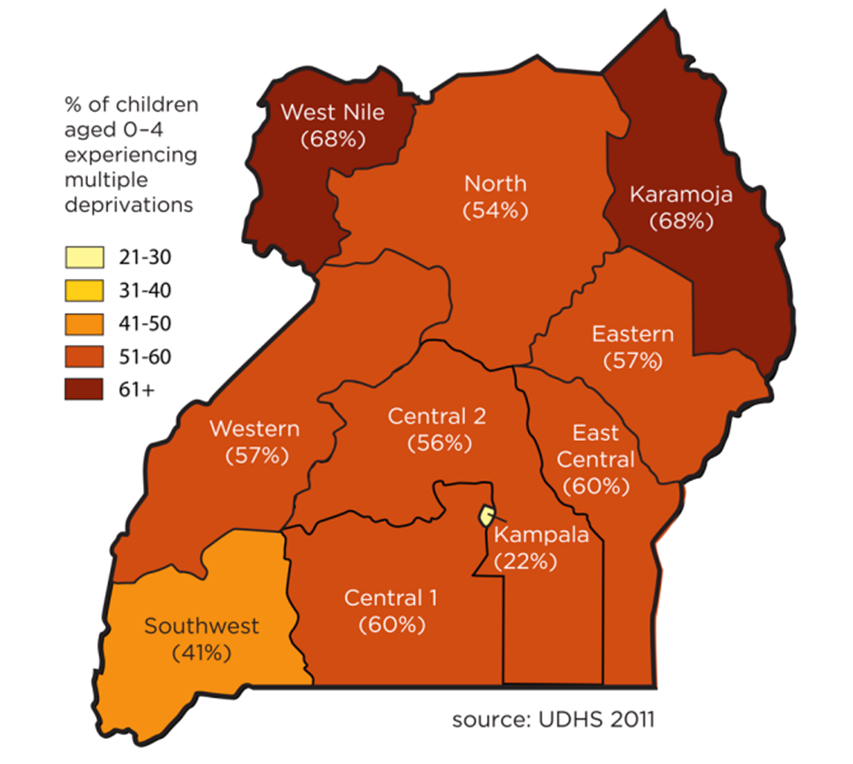
Studies show that over half of our young children (55%) in Uganda live in multidimensional poverty and are deprived in at least two crucial areas of their rights, and around 1 in 4 (24%) live in extreme poverty.
MAP SHOWING THE DISTRIBUTION OF CHILD POVERTY IN UGANDA
CHILD POVERTY IN UGANDA: KEY FACTS
• 55% of children 0 to 4 in Uganda live in poverty and 24% – or 1 in 5 – live in extreme poverty.
• 38% of children aged 6 to 17 in Uganda live in poverty and 18% live in extreme poverty.
• Child poverty rates are much higher in Northern Uganda, with the lowest rates in Central and Eastern regions.
• Child poverty is much higher in rural areas than urban areas.
• Orphans and children living in foster or adopted care have higher rates of child poverty.
• Child poverty is lower when the household head is female.
• Child poverty is slightly higher for boys in the 0 to 4 age group, but higher for girls in the 6 to 17 age group.
• 56% (12m million) children live in households that are below the poverty line and experience deprivations manifested in poor child health and nutrition as evidenced by child neonatal mortality; infant mortality; under five mortalities; malaria; HIV and AIDS among 0-14 years and chronic malnutrition especially within the first 1000 days.
• Ugandan children are at great risk of defilement and other sexual violence, with defilement cases accounting for 7% of reported crimes nationally.
• Before they reached 18 years old, nearly one in four girls (23.7%) had experienced a pregnancy and about 30% had been married in 2011.
• Only 30% of children under five are registered at birth, and only in five children are in possession of a birth certificate (UDHS 2011).
• There are at least 500,000 orphan children in Uganda who have lost both parents, and many of these live in vulnerable situations.
• Children suffer food insecurity, lack of clean water and poor sanitation, shelter, child labour and information deprivation.
ICCA aims to create a safer and more supportive environment for children facing significant challenges, ensuring their protection, well-being and development.
ICCA’s PROMISE TO THE CHILDREN
• End of all forms of child adversity inflicted by multidimensional child poverty.
• End child abuse, exploitation and neglect.
• End Child, Early and Forced Marriage (CEFM)
• No to online Child Sexual abuse.
• Better parenting and other informal early childhood development practices at household and community levels
• End Neonatal mortality; infant mortality; under-five mortality
• End malaria deaths among children below age five
• Reduce the number of children 0-14 years living with HIV.
• More children enrol in pre-primary education particularly in rural communities
• End of all forms of violence against children – physical, sexual, and emotional within family, school, and community settings, and within childcare and justice institutions
• Food Secure families
• Access to clean water and proper sanitation at home and school
• All child births are registered
• All children have better shelter
• All households have a source of income
• All children have a say in their wellbeing.
• All children grow up in a safe family environment